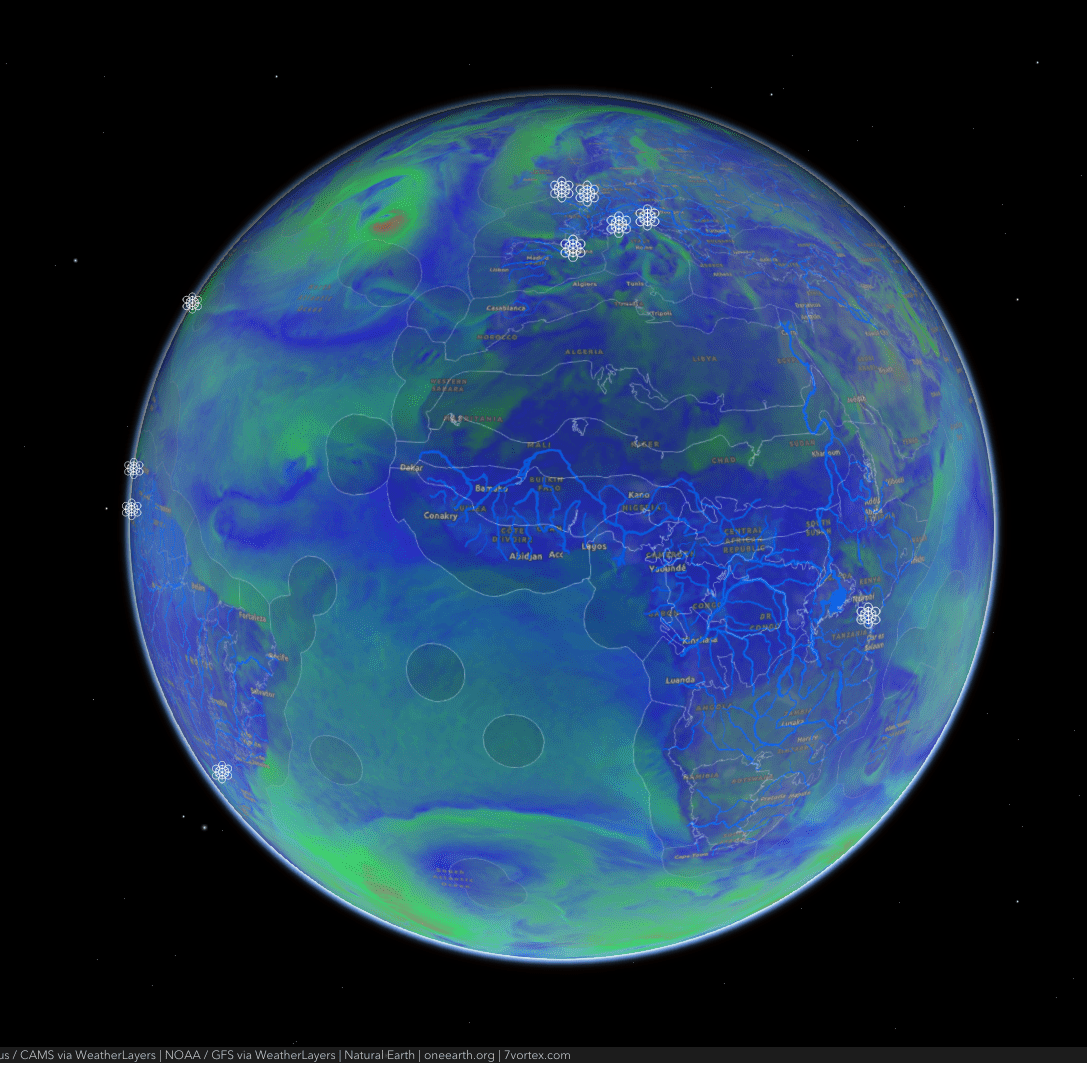
Nuestro planeta tiene un núcleo (bioclimático) tropical. Mas cerca del Ecuador, mayor biodiversidad. Mayor biodiversidad, mayor número de nichos ecológicos.
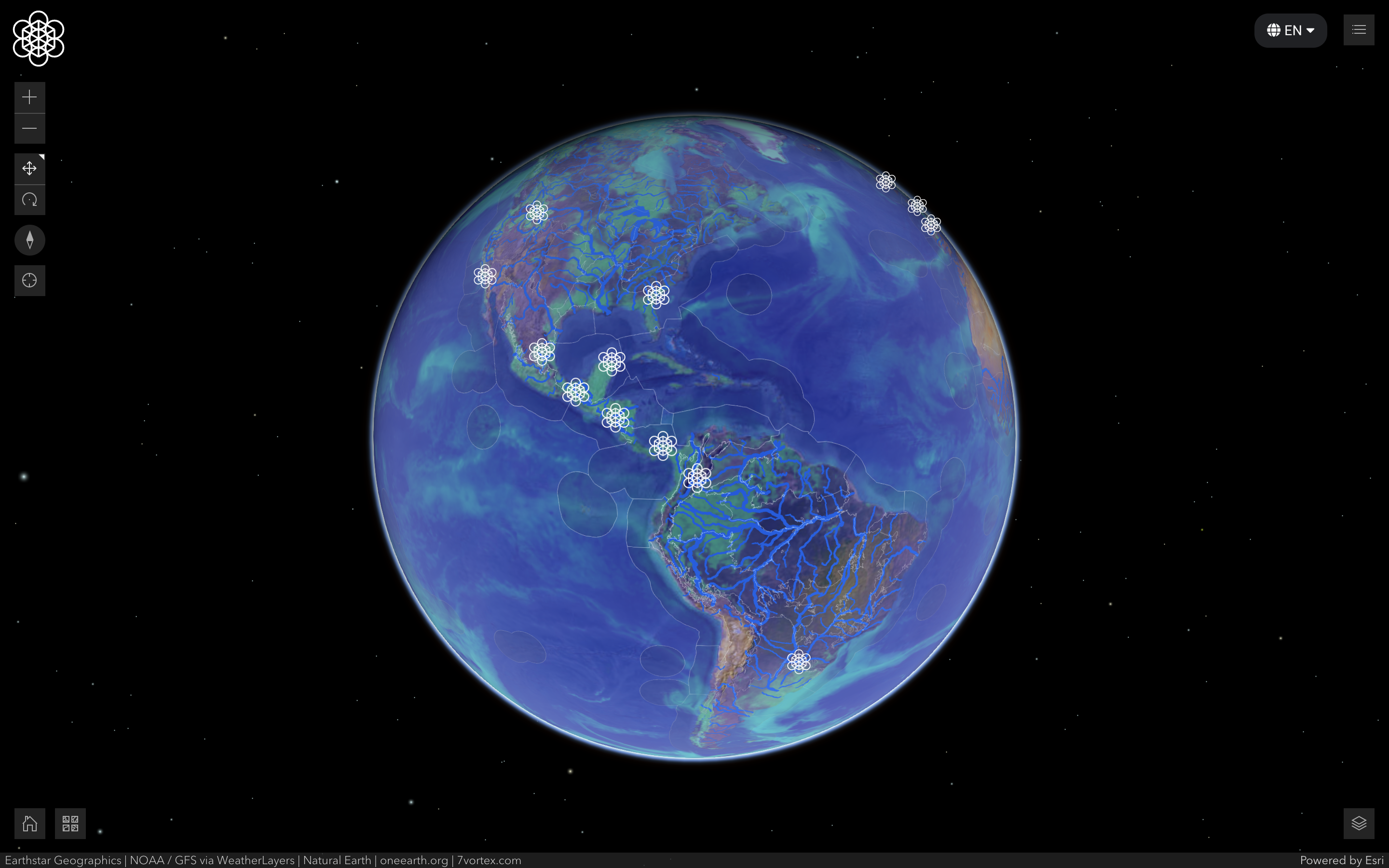
Metabolic Earth is a captivating digital bioart piece that explores the intricate interplay between nature and technology. By visualizing the dynamic processes that sustain life, this artwork delves into the metabolic exchanges of ecosystems, illustrating how humans interact with their bioregion and each other. Through vibrant imagery and interactive elements, viewers are invited to witness the transformation of isolated actions into the #regen movement, highlighting the tropical core of our water-based habitat. This piece not only serves as a reflection on our interdependency on natural systems but also challenges us to reconsider our relationship with the earth and its blue veins.
 vibriofischeri
The Earth system behaves like a planetary metabolism — a self-organizing network of living and non-living processes that continuously transform energy and matter, maintaining conditions that support life through dynamic feedback loops across the biosphere, atmosphere, hydrosphere, and lithosphere.
🌱 Introduction — The Earth System as a Living Whole
Life on our planet didn’t just happen on a static stage — over billions of years, it transformed the stage itself. Photosynthetic microbes raised atmospheric oxygen; forests and oceans cycle carbon; soil microbes recycle nutrients; and organisms from the deepest seas to the highest treetops participate in Earth’s biogeochemical choreography. These process networks are not isolated — they are interconnected and interdependent, forming what some scientists describe as a planetary metabolic system.
This concept resonates with the Gaia hypothesis, which portrays Earth as a complex, self-regulating system where life and environment co-evolve and co-regulate conditions like atmospheric composition, temperature, and ocean chemistry in ways that keep the planet broadly habitable.
🔄 The Strategy — How Earth’s Metabolism Works
Just as your body uses metabolism to convert food into energy and maintain internal balance, the Earth system uses energy flows and nutrient cycles to keep its vast network of processes far from equilibrium — a signature of life itself. 🌞
☀️ Energy Flow: The Sun provides a continuous stream of energy that drives photosynthesis, weather patterns, ocean circulation, and climate dynamics. Plants, algae, and cyanobacteria capture solar energy and store it as chemical energy. That energy then moves through food webs, powering ecosystems and fueling the cycling of matter.
🔄 Biogeochemical Cycles: Carbon, nitrogen, phosphorus, water, and other elements circulate through living and non-living reservoirs. Microbes in soil and oceans decompose organic matter, releasing nutrients for reuse; photosynthesizers sequester carbon; and geological processes like weathering and volcanic activity influence the availability of elements over long time scales.
🔁 Feedback Loops: These cycles are stitched together by feedbacks. For example, increases in atmospheric CO₂ can stimulate plant growth in some regions, which in turn affects carbon uptake; ocean nutrient shifts influence planktonic communities that affect both carbon cycling and oxygen levels. These feedbacks are analogous to the homeostatic controls in living organisms, though they arise from many distributed actors rather than a centralized metabolism.
✨ The Potential — What We Can Learn (and Design)
Seeing Earth as a metabolic system isn’t metaphysical poetry — it’s a systems insight with real design implications:
🔹 Embrace interconnected design.
Just as biogeochemical cycles depend on tight coupling between biological and physical processes, human systems — cities, supply chains, economies — can be designed with cycles, not linear flows, minimizing waste and maximizing reuse.
🔹 Tune feedbacks for resilience.
In biology, feedback loops help adjust internal states; in industrial ecosystems, real-time sensing and adaptive governance can stabilize resource use and emissions.
🔹 Align with planetary boundaries.
A metabolic system only persists when flows and stocks stay within safe ranges. Designing with Earth’s limits in mind — from carbon to water — mirrors how organisms thrive within physiological ranges.
🔹 Think in flows, not stocks.
Where traditional design focuses on discrete parts, nature teaches us to optimize the flows of energy, matter, and information — from microbes cycling nutrients in soil to forests shaping climate — for systemic vitality.
🌏 Inspiration takeaway:
Earth’s metabolism isn’t a mystical force; it’s a scientifically grounded analogy that helps us see our planet as a dynamic, interconnected system. By learning from it, we can build human systems that are restorative, resilient, and regenerative at scale.